How to Scale SEO Results Without Increasing Your Budget
Introduction
Many businesses assume that better SEO results always require a bigger marketing budget. In reality, that is not always true. Smart SEO strategies can help websites increase organic traffic, improve rankings, and generate more leads without spending additional money.
Search engines now prioritize user experience, content quality, relevance, and helpful information more than ever before. This gives businesses an opportunity to compete through strategy rather than budget alone.
If your website already receives some traffic but growth feels slow, the issue may not be your spending. The real problem could be weak content optimization, poor internal linking, outdated pages, or missed SEO opportunities.
This guide explains how businesses can scale SEO performance efficiently while keeping costs under control.
Focus on Updating Existing Content
One of the most effective ways to improve SEO results is to update existing content rather than constantly create new articles.
Many websites publish fresh blogs regularly, but ignore older pages that already have ranking potential. Updating and improving those pages can often produce faster SEO growth.
Here are a few ways to optimize older content:
-
Improve readability and structure
-
Add missing information
-
Optimize heading tags
-
Improve keyword placement naturally
-
Add relevant FAQs
-
Update meta titles and descriptions
-
Add internal links to important pages
-
Remove outdated information
Search engines prefer content that remains accurate, useful, and relevant. Regular updates signal that your website is actively maintained and valuable for users.
Strengthen Internal Linking Strategy
Internal linking plays a major role in SEO growth, yet many businesses overlook it.
Businesses that invest in quality SEO services often achieve stronger search visibility, improved website traffic, and better long-term growth through consistent optimization and strategic content improvements.
A strong internal linking strategy helps search engines understand your website structure and improves the flow of authority between pages.
Instead of adding random links, businesses should place internal links where they naturally fit within the content flow. Relevant internal linking helps search engines understand page relationships while also guiding users toward useful services and information on the website.
Well-placed internal links improve:
-
User navigation
-
Page authority distribution
-
Crawl efficiency
-
Keyword relevance
-
Time spent on the website
Internal linking is one of the easiest ways to scale SEO results without increasing costs.
Improve Content Quality Instead of Quantity
Publishing large amounts of generic content no longer produces strong SEO results.
Search engines now reward content that demonstrates expertise, depth, originality, and value.
Instead of focusing on posting more articles, focus on creating better articles that:
-
Answer user questions clearly
-
Solve real problems
-
Cover topics in detail
-
Use simple and readable language
-
Include structured headings
-
Provide practical insights
High-quality content improves:
-
User engagement
-
Organic rankings
-
Website authority
-
Search visibility
-
Backlink opportunities
Content quality has become one of the strongest ranking factors in modern SEO.
Optimize Content for Search Intent
Many websites target keywords but fail to understand what users actually want when they search online.
Search intent is one of the most important parts of SEO. If content does not match user expectations, rankings and engagement may remain weak.
Users searching informational keywords expect clear explanations and helpful answers. Users searching service related keywords are usually looking for solutions or providers.
To improve SEO performance:
-
Write for users first
-
Keep language simple and direct
-
Avoid keyword stuffing
-
Answer questions clearly
-
Organize content properly
-
Use headings strategically
When content aligns with user intent, websites usually see better engagement and stronger rankings.
Improve Technical SEO
Technical SEO improvements can significantly impact rankings without requiring a larger budget.
Many websites lose SEO opportunities because of technical issues that affect performance and user experience.
Important technical SEO areas include:
Improve Website Speed
A slow website can reduce rankings and increase bounce rates.
Ways to improve speed include:
-
Compressing images
-
Reducing unnecessary scripts
-
Enabling caching
-
Optimizing code files
-
Using lightweight website elements
Fix Broken Links
Broken links create a poor user experience and make websites harder for search engines to crawl.
Regularly monitor:
-
404 errors
-
Incorrect redirects
-
Missing pages
-
Broken internal links
Optimize Mobile Experience
Most users browse websites on mobile devices. A mobile-friendly website improves both user experience and SEO performance.
Your website should:
-
Load quickly on mobile
-
Use responsive layouts
-
Maintain readable font sizes
-
Provide smooth navigation
Technical SEO improvements help websites perform better without increasing marketing costs.
Build Topical Authority
Many websites target unrelated keywords without building authority around a specific niche.
Search engines prefer websites that consistently publish content around related topics. This helps establish trust and expertise.
Businesses should focus on creating connected content around their main services and industry topics.
For SEO focused websites, strong topical categories may include:
-
Technical SEO
-
Local SEO
-
Content marketing
-
Website optimization
-
Digital marketing strategies
-
Organic traffic growth
Publishing related content consistently strengthens topical relevance and improves rankings across multiple keywords.
Use AI Tools Smartly
AI tools are becoming increasingly common in SEO workflows. They can help businesses save time and improve efficiency when used correctly.
AI can assist with:
-
Content research
-
Keyword ideas
-
SEO outlines
-
Content optimization
-
Meta descriptions
However, content should still be reviewed and improved by humans. Search engines prioritize helpful, accurate, and trustworthy content.
At Expando, businesses can combine strategic SEO practices with quality focused content to improve long-term search visibility without overspending.
Improve Click Through Rates
Sometimes websites rank well but still receive low traffic because users are not clicking on search results.
Improving click through rates can increase traffic without improving rankings.
Ways to improve CTR include:
-
Writing compelling meta titles
-
Creating clear meta descriptions
-
Using benefit driven headlines
-
Adding curiosity naturally
-
Making titles more engaging
Strong search result snippets attract more users and improve overall SEO performance.
Earn Natural Backlinks Through Valuable Content
Backlinks remain an important ranking factor in SEO.
However, low-quality or spammy backlinks can negatively affect website authority.
Instead of focusing on artificial link building, businesses should create valuable content that naturally attracts links.
Content that often earns backlinks includes:
-
Detailed guides
-
Industry insights
-
Research based articles
-
Helpful resources
-
Practical tutorials
-
Informative blog posts
When content provides genuine value, other websites are more likely to reference and share it.
Track SEO Performance Regularly
SEO growth becomes easier when businesses understand what is already working.
Instead of constantly chasing new strategies, analyze existing data and improve successful pages further.
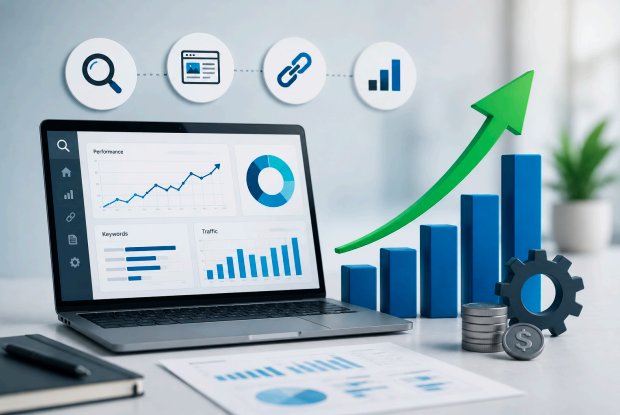
Important SEO metrics to monitor include:
-
Organic traffic
-
Top performing pages
-
Keyword rankings
-
Bounce rates
-
User engagement
-
Conversion-focused pages
Tracking performance helps businesses focus on strategies that produce real results while avoiding wasted effort.
Businesses that want to convert organic traffic into leads should also focus on user experience, content relevance, and conversion focused optimization strategies.
Conclusion
Scaling SEO results does not always require increasing your budget. Many businesses already have untapped opportunities within their existing website and content.
By improving internal linking, updating existing pages, optimizing technical SEO, focusing on search intent, and building topical authority, businesses can achieve strong organic growth efficiently.
The key to long-term SEO success is consistency, quality, and smarter optimization strategies rather than simply spending more money.
Call to Action
Looking to improve your website rankings without increasing your marketing costs? Expando helps businesses build smarter SEO strategies focused on long term organic growth, better visibility, and higher quality traffic. Whether you want to improve technical SEO, strengthen content performance, or grow your search presence, the right strategy can make a significant difference in your results.
FAQs
1. Can SEO improve without increasing budget?
Yes. Businesses can improve SEO by optimizing existing content, improving technical SEO, strengthening internal links, and focusing on user intent.
2. Why is internal linking important for SEO?
Internal linking helps search engines understand website structure and improves authority flow between pages while enhancing user navigation.
3. Does updating old content help rankings?
Yes. Updating older pages with improved information, better formatting, and optimized headings can improve rankings and visibility.
4. What is topical authority in SEO?
Topical authority means building expertise in a specific subject by consistently publishing high-quality, related content.
5. How does technical SEO affect rankings?
Technical SEO improves website performance, crawlability, speed, mobile usability, and user experience, all of which influence search rankings.