Attracting visitors to your website through search engines is an important step in digital marketing success, but traffic alone doesn’t pay the bills. What really matters is how many of those visitors turn into paying customers. Many businesses invest in SEO Services to improve visibility and attract organic traffic, but the real challenge lies in converting that traffic into revenue. What’s the use of a thousand clicks if none of them take action?
Converting SEO traffic into sales requires a balance of strategy, psychology, and consistent optimization. At Expando, we’ve seen many businesses invest heavily in content and keywords but miss opportunities to guide potential customers toward making a purchase. Let’s explore how you can transform your search visitors into loyal paying clients.
1. Understand the Intent Behind Every Click
Not all website visitors are the same. Some people are just gathering information, while others are ready to buy. Understanding search intent is key to converting traffic into sales.
There are generally three types of search intent:
Informational intent: Users are seeking knowledge or solutions, for example, “how to choose the best CRM.”
Navigational intent: Users are looking for a specific website or brand.
Transactional intent: Users are ready to make a purchase or take an action.
To improve conversions, tailor your content to match the intent. Create educational blog posts for informational queries and persuasive product or service pages for transactional ones. When your content aligns with user intent, visitors are more likely to stay, trust your expertise, and eventually buy.
2. Optimize Landing Pages for Conversions
Your landing pages are where SEO traffic turns into paying customers. A well-optimized landing page should do more than just attract visitors; it should guide them toward taking action.
A few best practices include:
Clear headlines that communicate value immediately.
High-quality visuals that support your message.
Concise, persuasive copy focused on benefits rather than features.
Visible calls to action such as “Get Started,” “Request a Quote,” or “Buy Now.”
Avoid clutter and distractions that can confuse users. The goal is to make the path from interest to action as simple as possible. If users have to think too hard about what to do next, they’ll leave before converting.
3. Build Trust with Social Proof and Testimonials
Before customers make a purchase, they need to trust your brand. Social proof such as testimonials, reviews, and case studies plays a powerful role in this decision-making process.
When visitors see real experiences from satisfied customers, they feel more confident about buying from you. Display testimonials on landing pages, include customer success stories in blogs, and highlight reviews near your calls to action.
Even small touches like “trusted by 500 plus businesses” or verified customer ratings can boost credibility and reduce hesitation.
4. Use Lead Magnets to Capture Interested Visitors
Not every visitor will convert on their first visit. Many users need time to research and compare before making a decision. That’s why it’s important to capture their contact information so you can nurture them later.
Offer valuable lead magnets such as free eBooks or checklists, email newsletters with insider tips, webinars or free consultations, and discount codes for first-time buyers.
Once visitors share their email addresses, follow up with automated email sequences that educate, build trust, and eventually drive conversions.
5. Leverage Retargeting for Lost Visitors
Even the best-optimized website loses some visitors. Retargeting allows you to bring those people back by showing relevant ads to users who previously visited your site and reminding them of what they left behind.
For example, if someone viewed your product page but didn’t purchase, a retargeting ad offering a limited-time discount might bring them back.
This gentle reminder can be the final push a potential customer needs to complete their purchase. Retargeting is especially powerful when combined with strong calls to action and personalized messaging.
6. Focus on User Experience (UX)
A smooth, intuitive, and visually appealing website keeps visitors engaged and reduces bounce rates. Poor design, confusing navigation, or slow load times can drive users away before they even see your offer.
To improve user experience:
Ensure pages load quickly, ideally under three seconds.
Make navigation simple and consistent.
Use mobile-friendly designs that adapt to all devices.
Keep forms short and easy to fill.
User experience is more than design; it’s about creating an environment that builds trust and encourages users to take the next step.
7. Target the Right Audience with Local SEO
While global visibility is great, many businesses thrive by connecting with nearby customers. That’s where the Importance of Local SEO comes in. Optimizing for local search ensures that people in your area can find your business when they’re ready to buy.
Make sure your Google Business Profile is complete, accurate, and updated regularly. Encourage customer reviews, add location-specific keywords, and include your name, address, and phone number consistently across all platforms.
Local customers are often closer to the buying stage, which means higher conversion potential. When you appear in local search results, you’re targeting people who already have purchase intent.
8. Offer Value Through Content Marketing
Great content does more than attract visitors; it educates and nurtures them until they’re ready to buy. Create blog posts, guides, videos, and infographics that solve real problems your audience faces.
Instead of pushing a sale immediately, focus on providing helpful insights. Over time, this builds authority and trust, positioning your brand as the go-to solution when customers are ready to make a decision.
At Expando, we emphasize strategic content marketing as a key step in converting SEO traffic into paying customers. The more value you give, the more credibility you earn.
9. Analyze and Refine Your Funnel
Data-driven decisions lead to better conversions. Use analytics tools to understand how visitors move through your website, where they land, how long they stay, and where they drop off.
Look for patterns such as high traffic but low conversions on certain pages, abandoned carts or incomplete form submissions, and keywords driving traffic that doesn’t convert.
Once you identify weak points, test improvements using A B testing. Even small tweaks like changing button colors, adjusting headlines, or rephrasing calls to action can significantly boost conversion rates.
10. Balance SEO with Paid Advertising
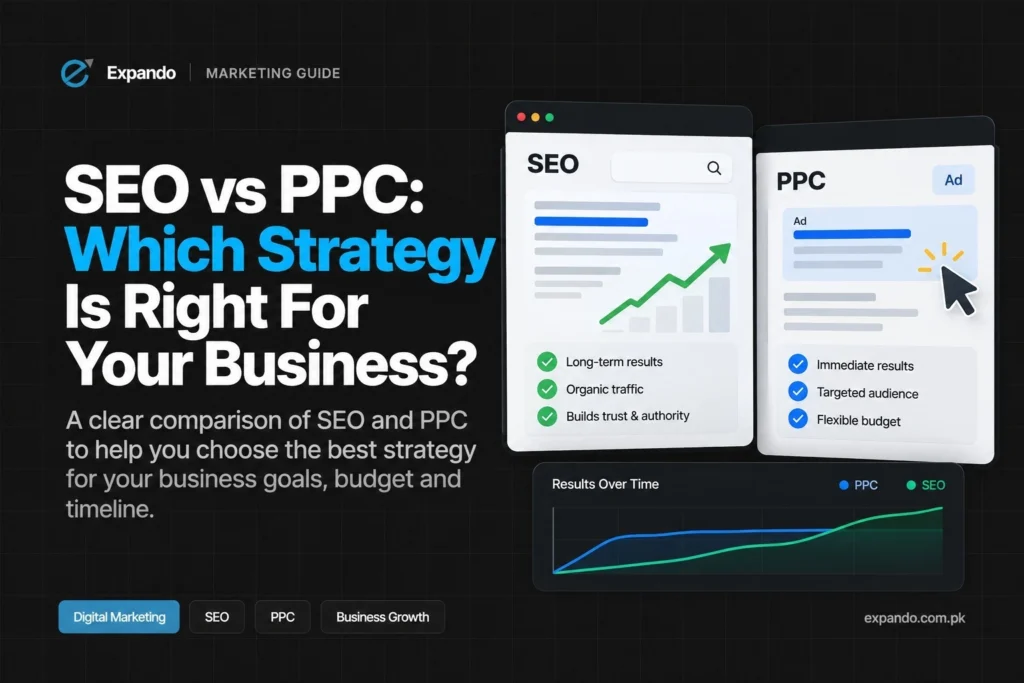
While SEO builds long-term visibility, paid ads can help you convert faster. Understanding the difference between SEO vs PPC helps you develop a strategy that uses both effectively. SEO provides consistent organic traffic over time, while PPC delivers immediate visibility for high-intent keywords.
The smartest approach is to use SEO for sustained growth and PPC for quick wins, promotions, or product launches. Together, they create a balanced digital marketing strategy that drives traffic and sales simultaneously.
Conclusion
Turning SEO traffic into paying customers is a process of alignment, matching intent, improving experience, and guiding visitors naturally toward action. From optimizing landing pages and building trust to nurturing leads and leveraging data, every step contributes to higher conversions.
At Expando, we believe the key to success lies not just in attracting visitors but in converting them into loyal customers. When you combine effective content, local visibility, and continuous optimization, your SEO efforts will do more than just bring clicks; they’ll bring real business growth.